Lava, Moonbows, Mist, and More
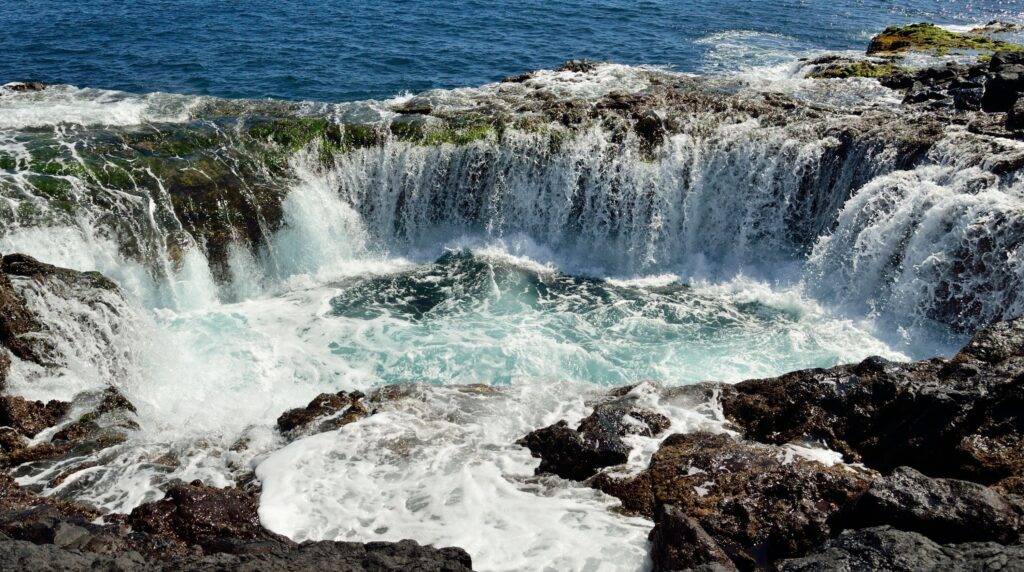
The largest waterfall on Earth has never been photographed. Nobody has stood beside it, heard it roar, or captured it on camera. It sits beneath the ocean between Greenland and Iceland, invisible and enormous, dropping 11,500 feet through cold dark water.
And somehow, that’s not even the most surprising thing on this list.
Waterfalls are one of those things we file away early and stop thinking about. Water reaches an edge, drops, crashes, and moves on. Simple, familiar, done. But the more closely you look at them, the more they refuse to behave. Some glow like molten lava. Some bleed red across Antarctic ice. Others paint rainbows in the dark, dissolve into mist before hitting the ground, freeze solid on the outside while silently flowing within, or appear to defy gravity and flow upward.
None of this is myth. None of it is exaggerated. These are real waterfalls, doing things waterfalls aren’t supposed to do. Following are seven that prove it.
1. The Waterfall That Looks Like Lava
Once a year, for just a handful of days, a waterfall in Yosemite stops looking like water.
Horsetail Fall —nicknamed the “Firefall” — turns bright orange when the February sunset hits it at exactly the right angle.
The light transforms the falling water into what looks unmistakably like molten lava pouring down the face of El Capitan. Not kind of like lava. Not vaguely orange. Like something volcanic is actively happening on the side of a granite cliff.
It only works when everything lines up at once. There needs to be enough snowmelt or rainfall to keep water flowing over the fall, which isn’t always guaranteed in February.
The sky has to be clear enough for sunset light to reach the cliff face. And the angle of the sun has to be precisely right — a window that only opens for a brief stretch of days each year.

Miss any one of those conditions and the effect vanishes entirely. Show up on the wrong day, or with clouds rolling in at the wrong moment, and Horsetail Fall is just a waterfall.
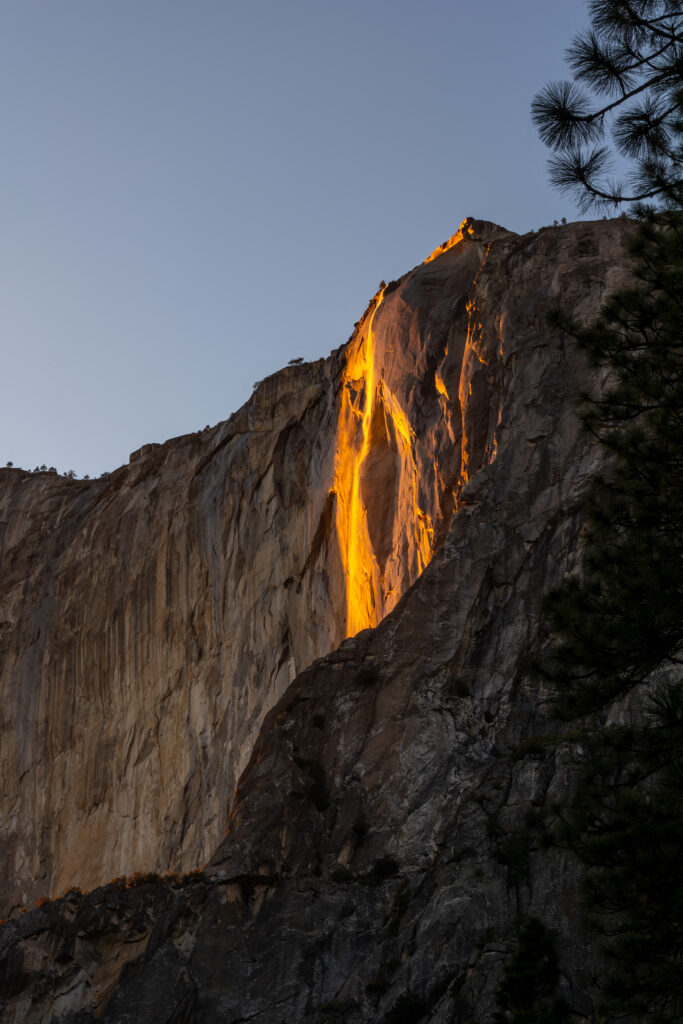
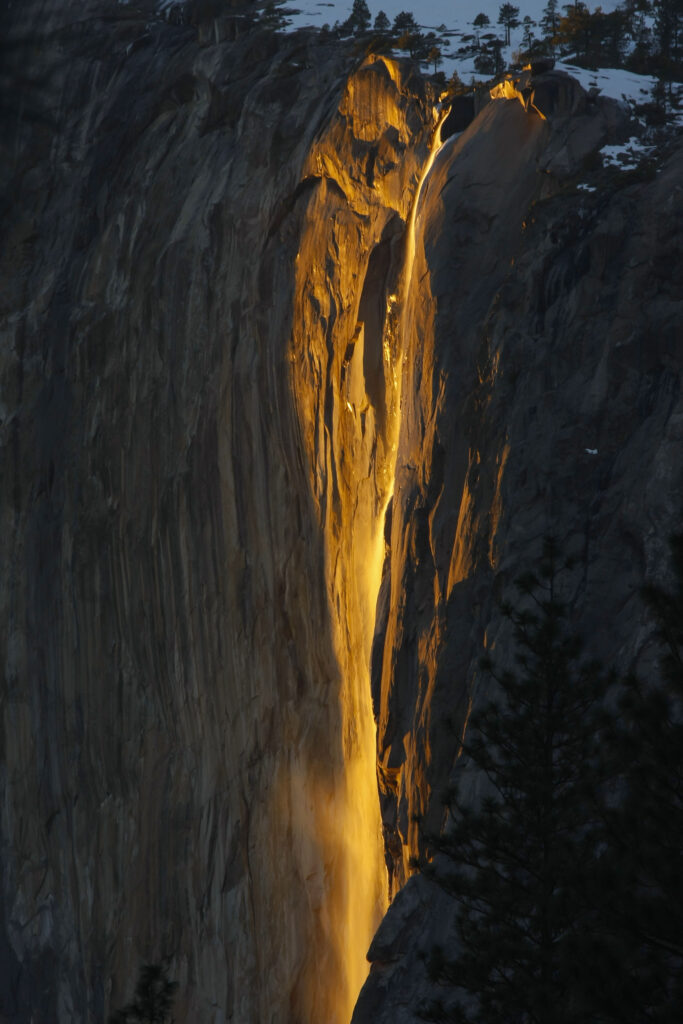
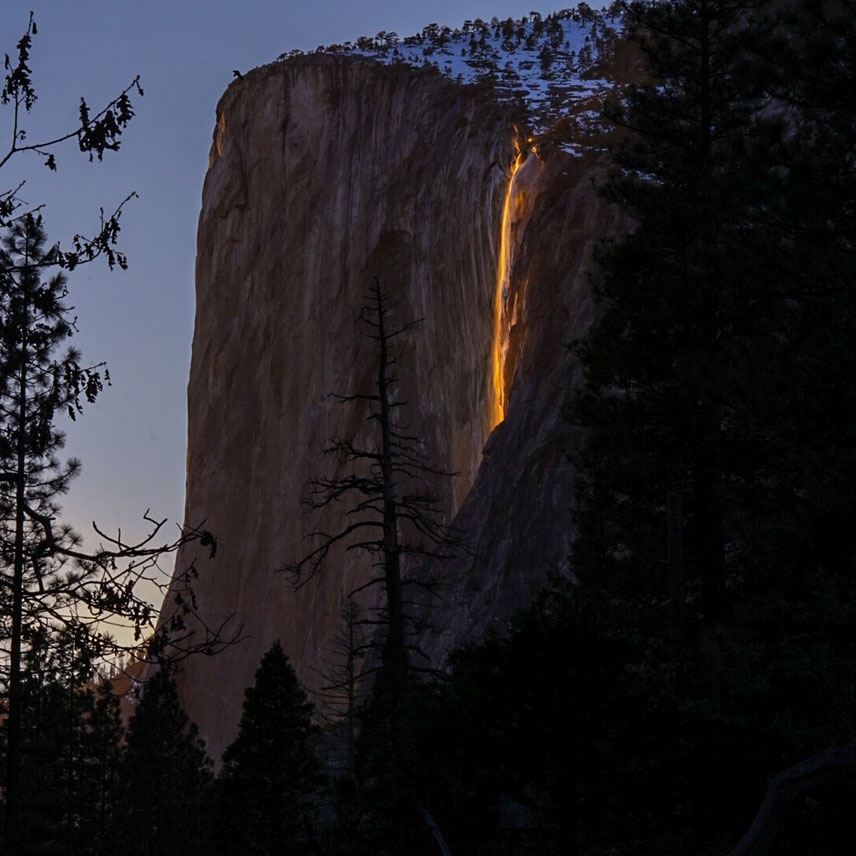
When it does work, the result is genuinely hard to process. Your brain keeps insisting it’s looking at something volcanic, something dangerous, something digitally edited. People who witness it in person often describe a moment of real confusion before their mind catches up with what they’re actually seeing. But it’s just water and sunlight and timing. That’s what makes it so captivating. Nothing is fake. Nothing is staged. Nature just quietly set everything up — the cliff, the angle, the season, the light — and waited for the right moment to show off

2. The Blood Red Waterfall in Antarctica
Antarctica is already one of the most otherworldly places on Earth. Vast, silent, brutally cold, and almost entirely white. Blood Falls somehow makes it even more interesting.
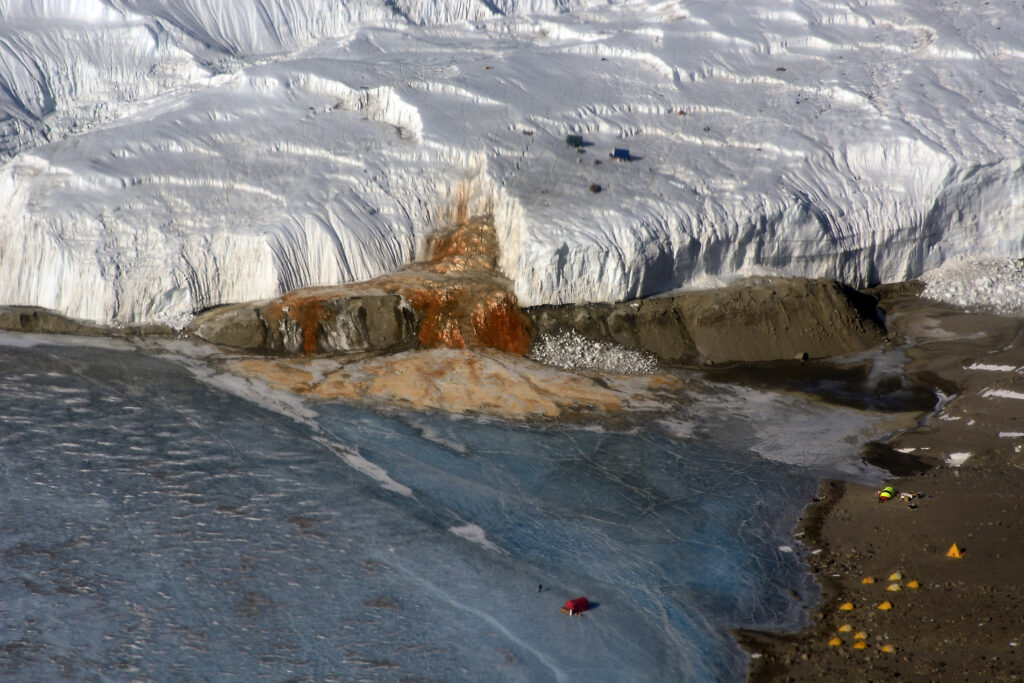
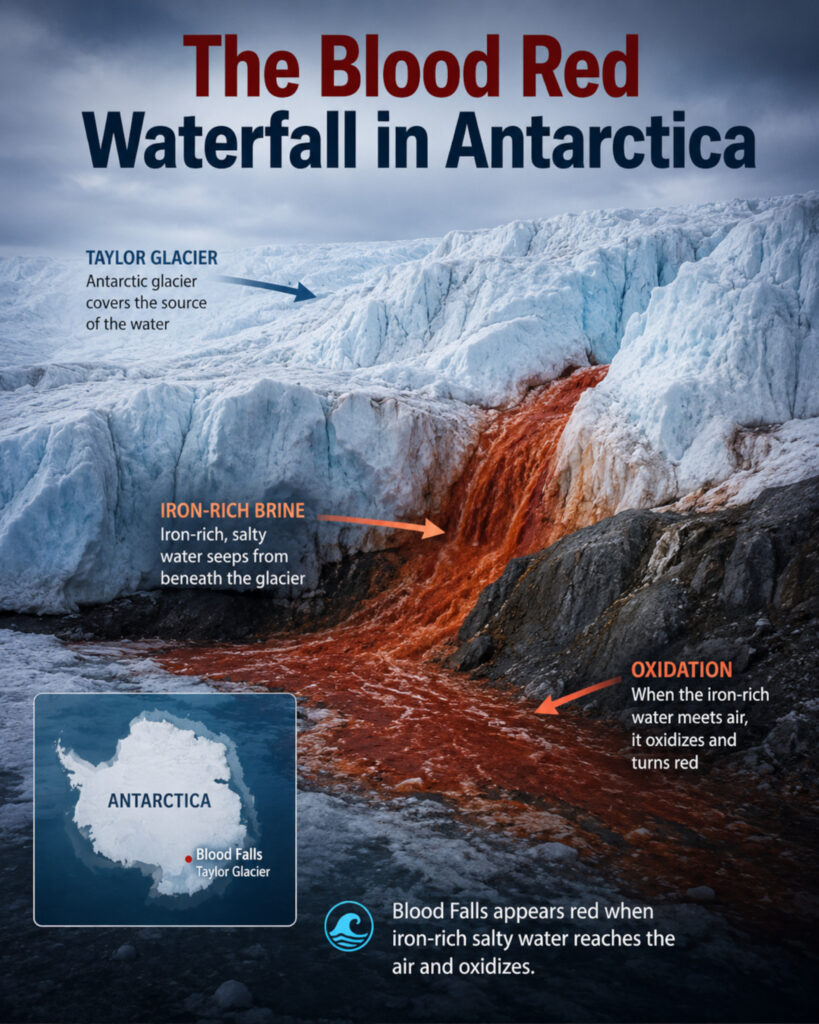
Seeping from Taylor Glacier in the McMurdo Dry Valleys, Blood Falls earns its name from the deep reddish staining that spreads across the surrounding ice.
At first glance, it looks like the glacier is wounded. Like something underneath it is bleeding out slowly onto the frozen ground.
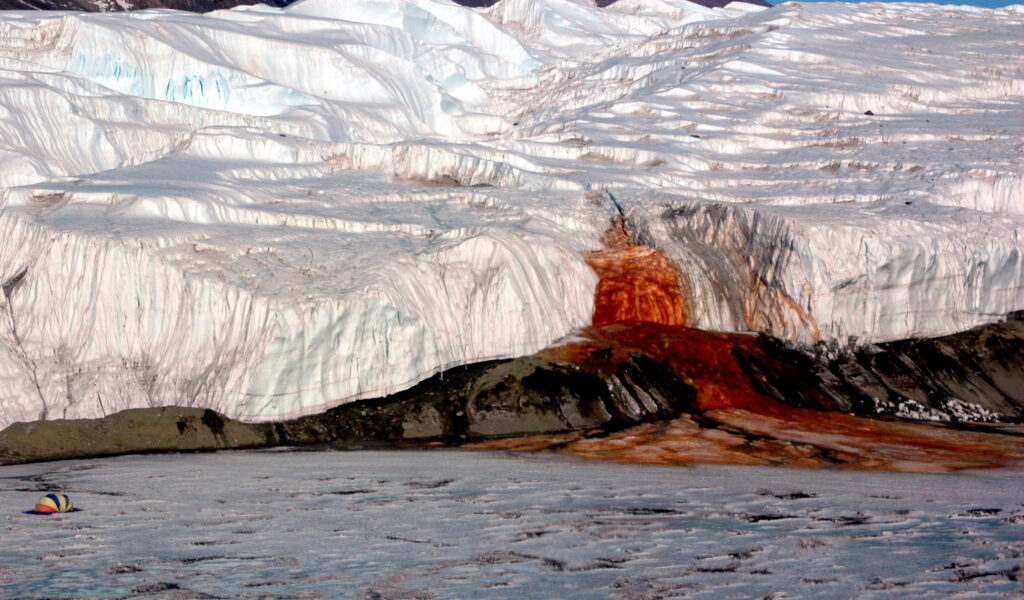
The real explanation is both simpler and more fascinating. Iron-rich saltwater, trapped beneath the glacier for potentially millions of years, slowly seeps to the surface through a crack in the ice. The moment it meets oxygen, the iron oxidizes — essentially rusting — and turns that distinctive reddish-brown color.
It’s worth pausing on that timeline. This water has been sealed beneath the glacier since before modern humans existed. Sitting in cold, dark, oxygen-starved conditions for an almost incomprehensible stretch of time. And when it finally reaches the surface, it rusts.
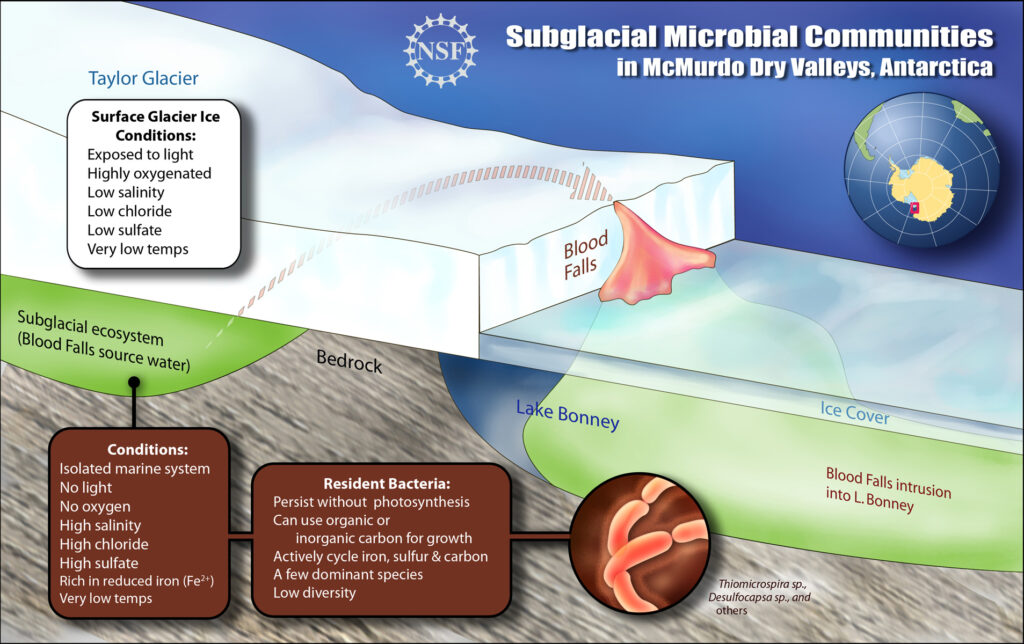
It’s not a dramatic curtain of red water. It’s more of a slow, eerie seep that creeps across the ice gradually — more geological event than waterfall in any traditional sense. But that’s exactly what makes it so compelling. Blood Falls isn’t just a visual curiosity. It’s a window into a hidden world beneath the ice, where briny water and microscopic life may have survived in isolation for an extraordinarily long time.
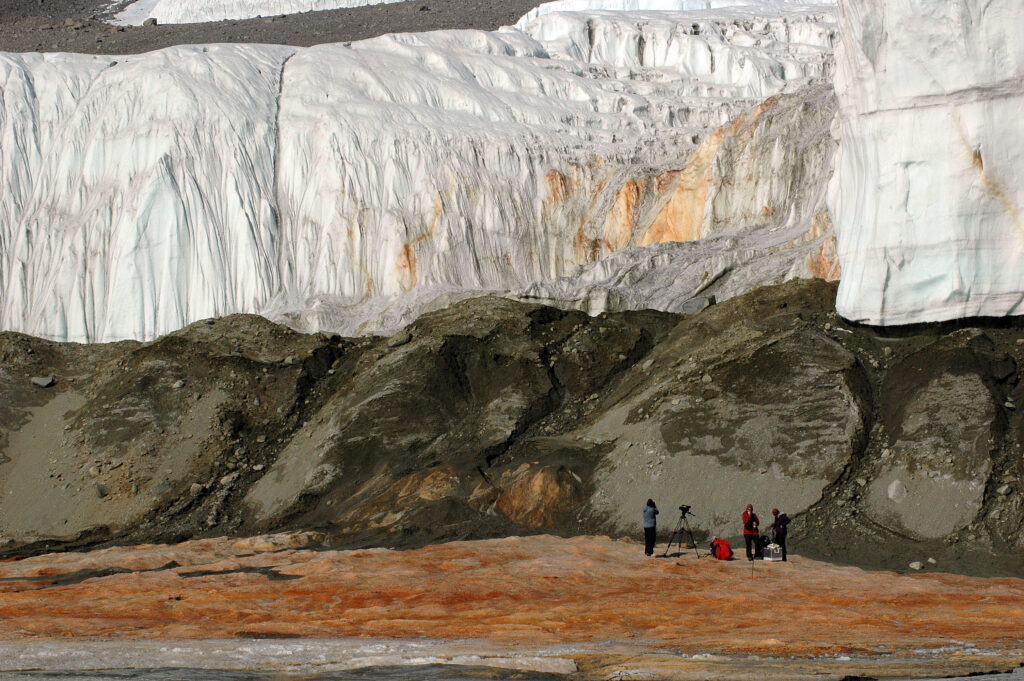
Scientists have found evidence of microbial communities living in that trapped saltwater — organisms that have adapted to conditions most life couldn’t survive.Scientists have found evidence of microbial communities living in that trapped saltwater — organisms that have adapted to conditions most life couldn’t survive. It looks like a mystery leaking out of a glacier. Because that’s precisely what it is.
3. The World’s Largest Waterfall Is Underwater
It’s not Niagara. It’s not Angel Falls. The largest waterfall on Earth can’t be photographed from a scenic overlook, hiked on a trail, or heard roaring from a mile away.
It’s beneath the ocean.

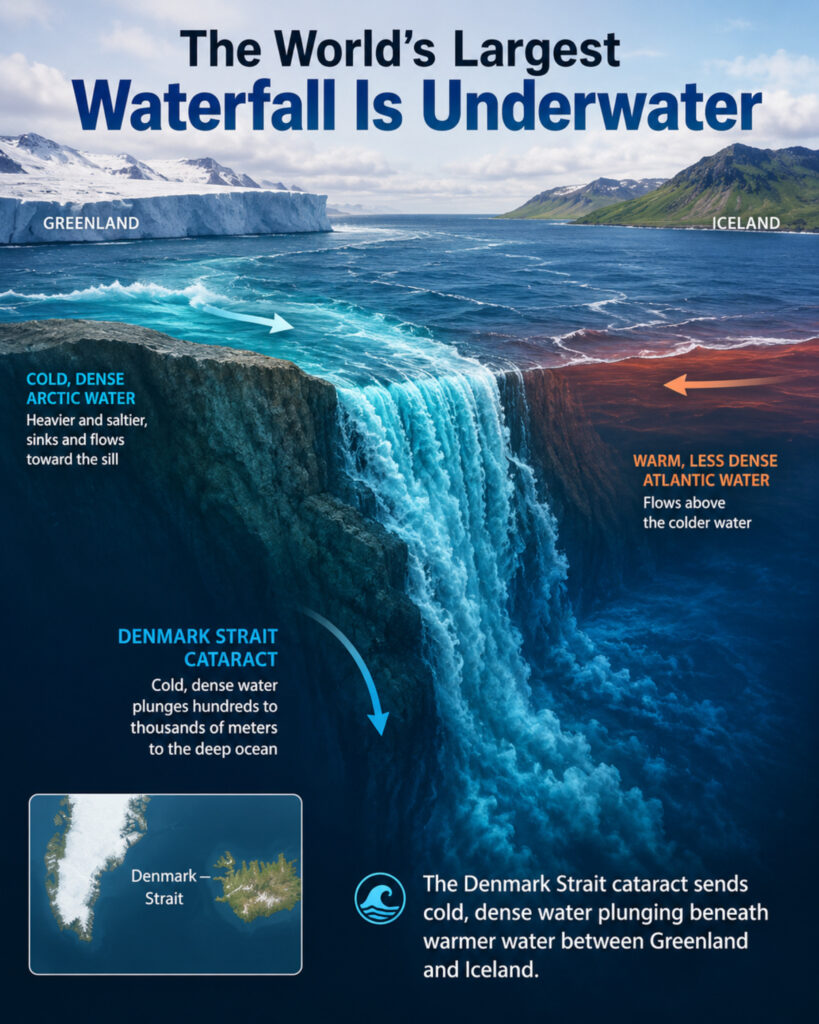
The Denmark Strait cataract sits between Greenland and Iceland, hidden under thousands of feet of seawater. It works on the same basic principle as any waterfall — water drops from a higher level to a lower one — but here, the “water” is a massive body of cold, dense ocean water moving beneath warmer, lighter water above it.
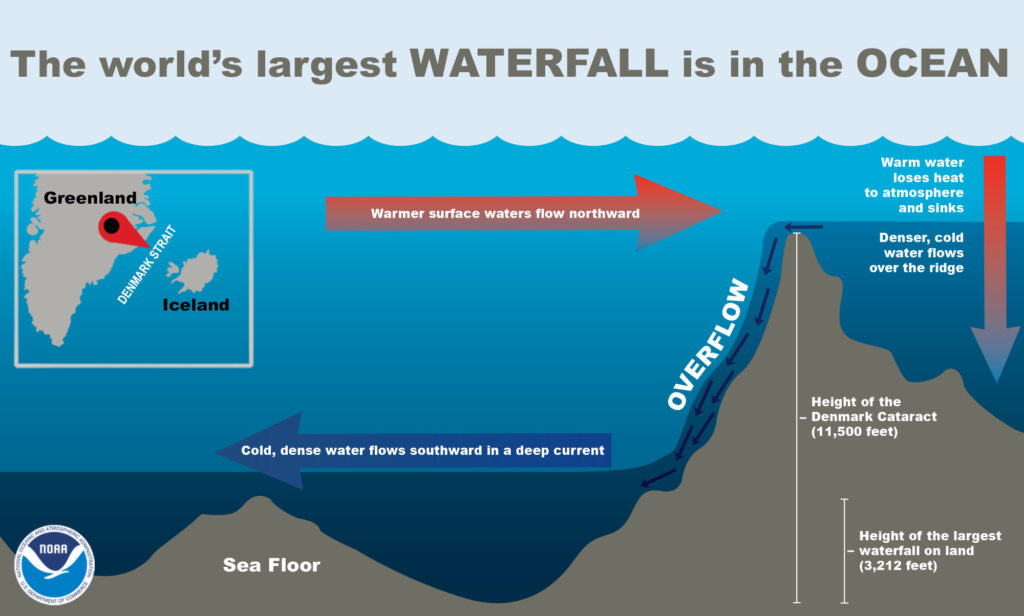
Cold water is heavier than warm water, particularly when it carries a high salt content. When that cold dense water crosses an underwater ridge in the Denmark Strait, it has nowhere to go but down. It plunges beneath the warmer water in a cascade that drops roughly 11,500 feet — more than double the height of Angel Falls — carrying a volume of water that makes every surface waterfall on Earth look modest by comparison.

You can’t stand beside it. You can’t hear it roar. You can’t capture it in a photograph or point to it on a map and say “there it is. But it’s real, it’s enormous, and it’s happening right now — continuously, silently, completely out of sight beneath the surface of the North Atlantic.
There’s something genuinely humbling about that. We tend to think of the world’s great natural wonders as things we can visit, see, and photograph.
The biggest waterfall on Earth has no visitors center, no scenic overlook, no best time of year to go. It just keeps falling, silently, in the dark, completely indifferent to whether anyone ever knows it’s there.
4. The Waterfall That Makes Rainbows at Night
Rainbows belong to daylight. That’s just how it works — sunlight, water droplets, refraction, color. Everyone learns this early and carries it as a given.
But some waterfalls make rainbows in complete darkness.

These are called moonbows, and they work on exactly the same principle as a daytime rainbow. Light enters water droplets suspended in the mist, refracts, and separates into color. The only difference is the light source. At night, when the moon is bright enough and the sky is dark enough, moonlight can do the same work the sun does during the day.
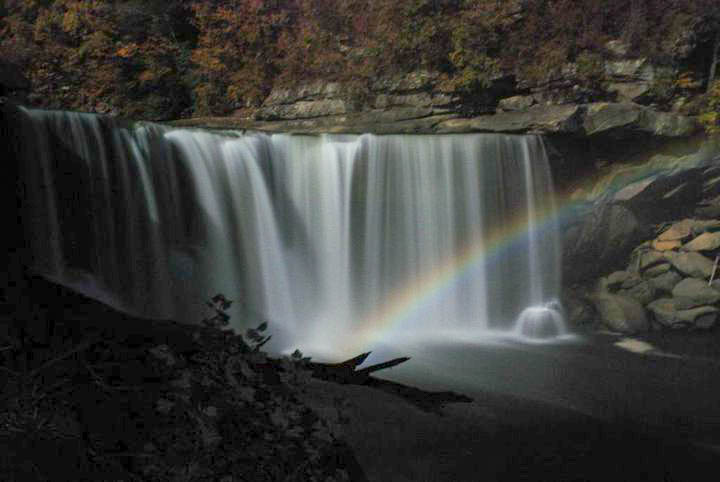
Because moonlight is so much dimmer than sunlight, moonbows are often faint and silvery to the naked eye. Many people who witness them describe a pale arc hovering in the mist, almost ghostlike. Long-exposure photography can reveal far more color — the full spectrum that the human eye can barely detect in the dark.
The conditions required are precise. A near-full moon. A dark sky with no competing light. Heavy mist in the air. The right viewing angle.
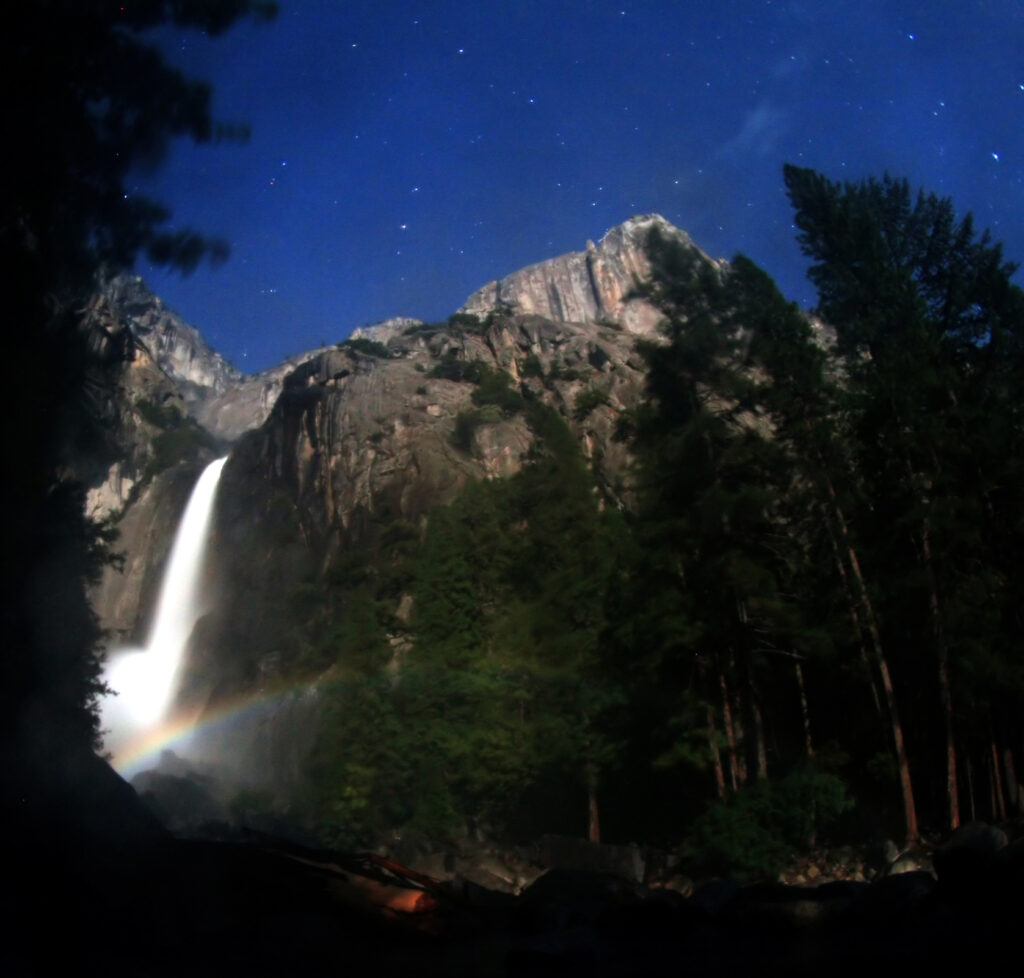
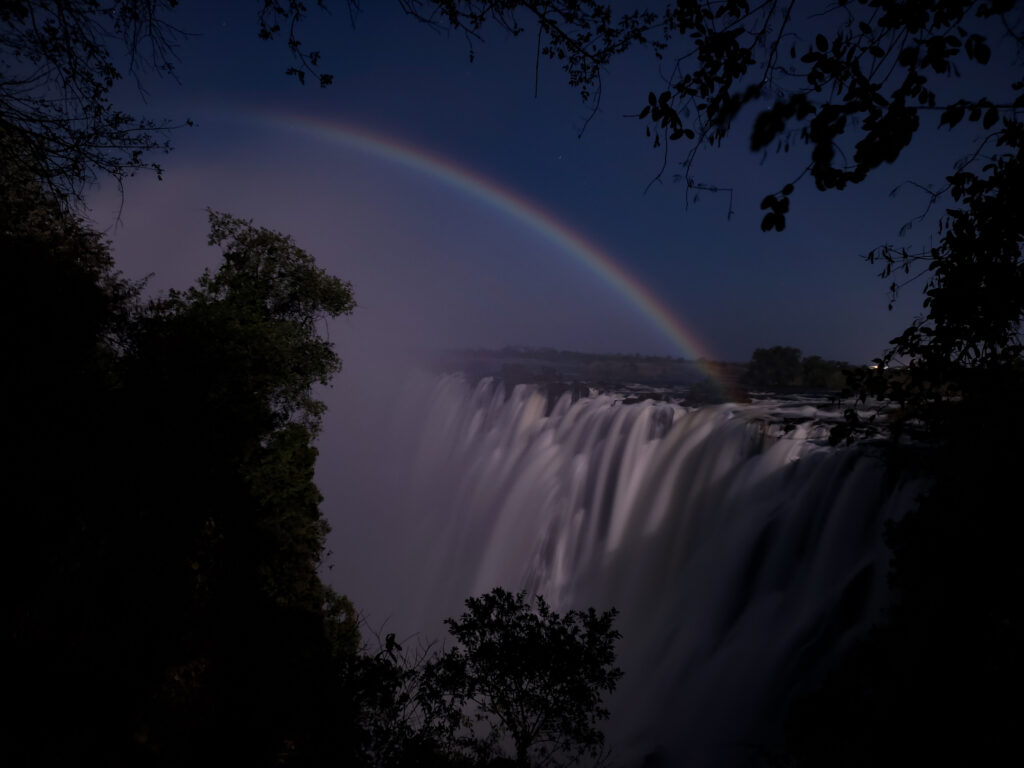
When everything aligns, a handful of waterfalls around the world become reliable places to witness them — Cumberland Falls in Kentucky, Yosemite Falls in California, and Victoria Falls on the border of Zambia and Zimbabwe among the most well-known.
A rainbow in the dark still feels like a contradiction, even once you fully understand the science. It feels like something that simply shouldn’t exist. That’s probably why people plan entire trips around the chance to see one.

5. The Waterfall So Tall It Turns to Mist
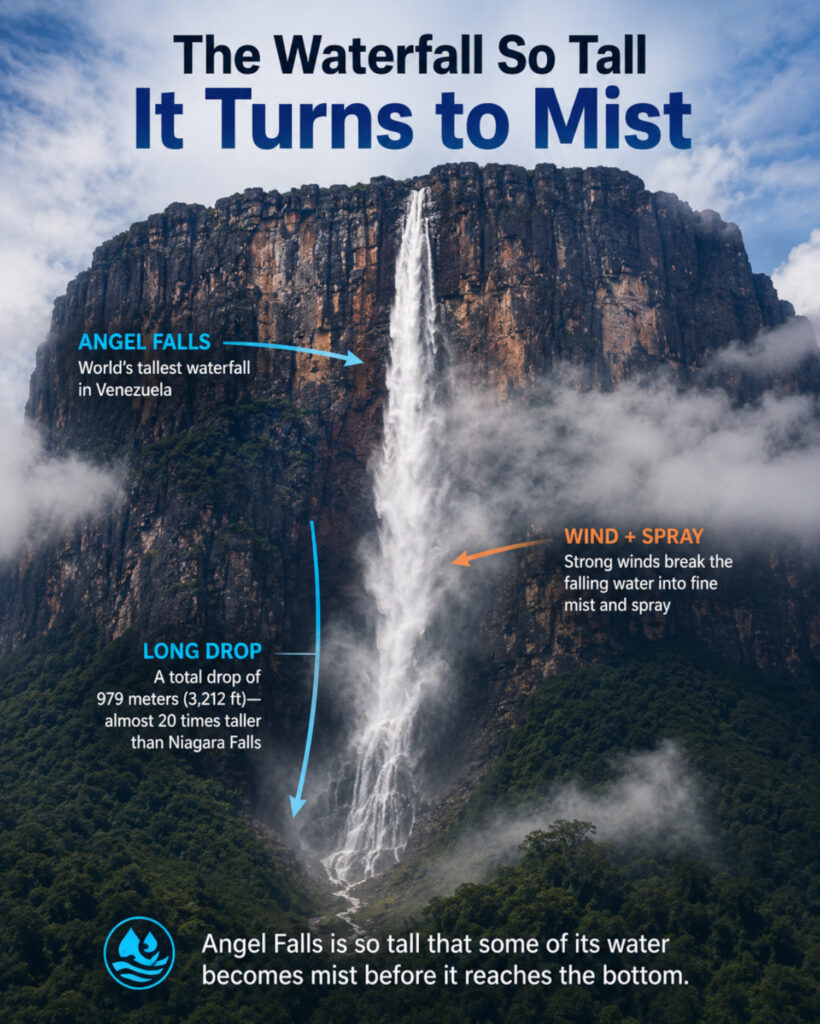
Angel Falls in Venezuela holds the record for the world’s tallest uninterrupted waterfall. It drops from the edge of Auyán-Tepuí, a dramatic flat-topped mountain rising above the surrounding jungle, in one continuous unbroken plunge of roughly 3,200 feet.
That number is hard to picture.
So here’s another way to think about it: the water leaving the top of Angel Falls has time to do a lot of things before it reaches the bottom.
And one of those things is disappear.
At that height, the drop is long enough for wind and air resistance to break the water apart.
What starts as a concentrated stream at the top gradually loses cohesion as it falls.
The lower portion doesn’t crash into a pool so much as it drifts, scatters, and fades into fine spray that hangs in the air around the base of the cliff.
At that height, the drop is long enough for wind and air resistance to break the water apart.
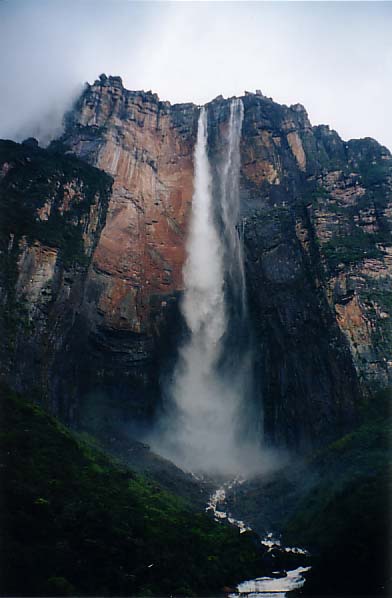
What starts as a concentrated stream at the top gradually loses cohesion as it falls. The lower portion doesn’t crash into a pool so much as it drifts, scatters, and fades into fine spray that hangs in the air around the base of the cliff.

From a distance, Angel Falls looks almost ghostlike — solid and powerful at the top, gradually dissolving into nothing toward the bottom. The upper section is a clear ribbon of falling water. The lower section is more like a rumor of water, a permanent mist clinging to the rock face.
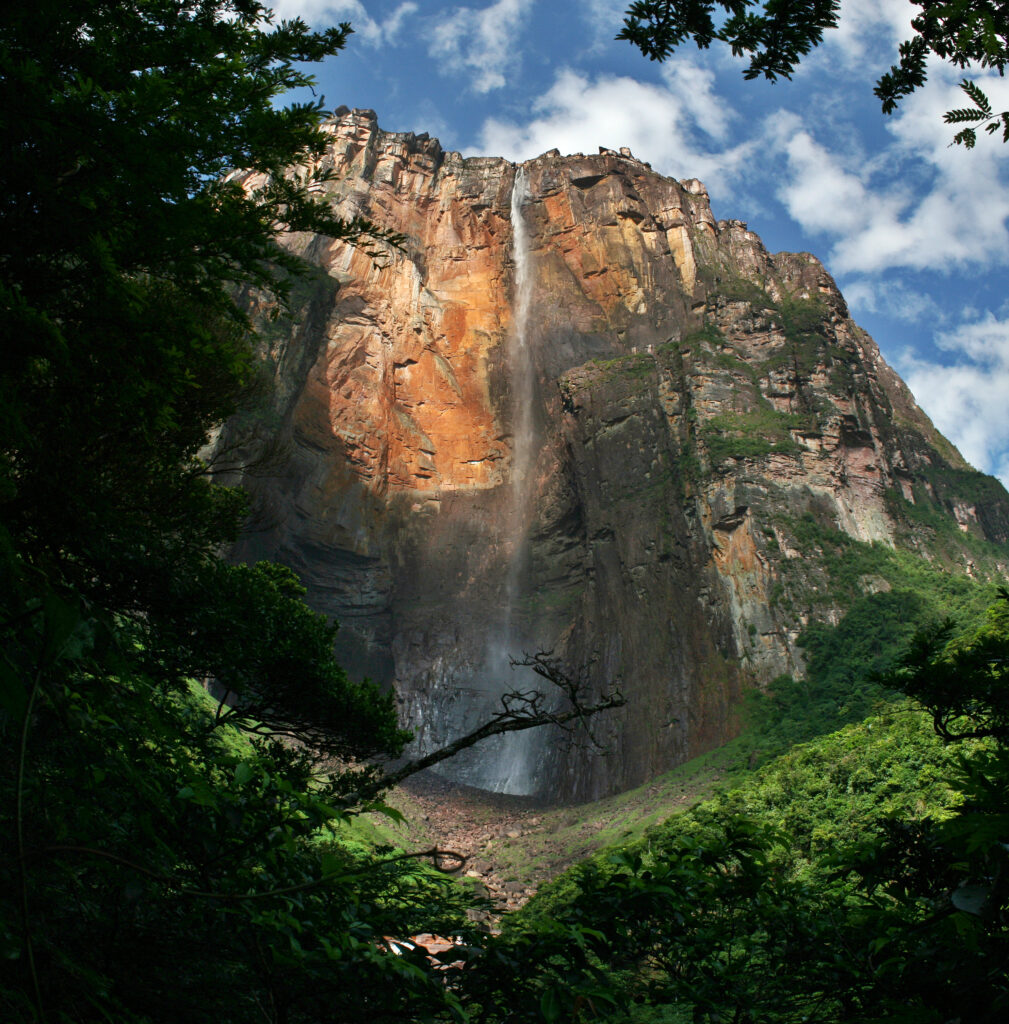
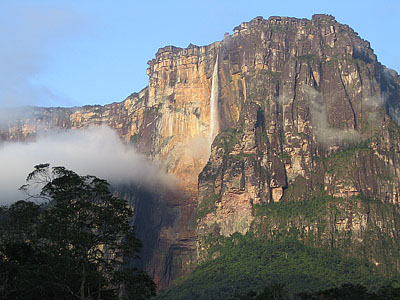
Most waterfalls are defined by their impact — the crash, the roar, the churning pool at the base. Angel Falls is defined partly by its absence. Some of it simply never arrives. There’s something unexpectedly delicate about the most dramatic waterfall on Earth.
6. Waterfalls That Freeze But Keep Moving Inside
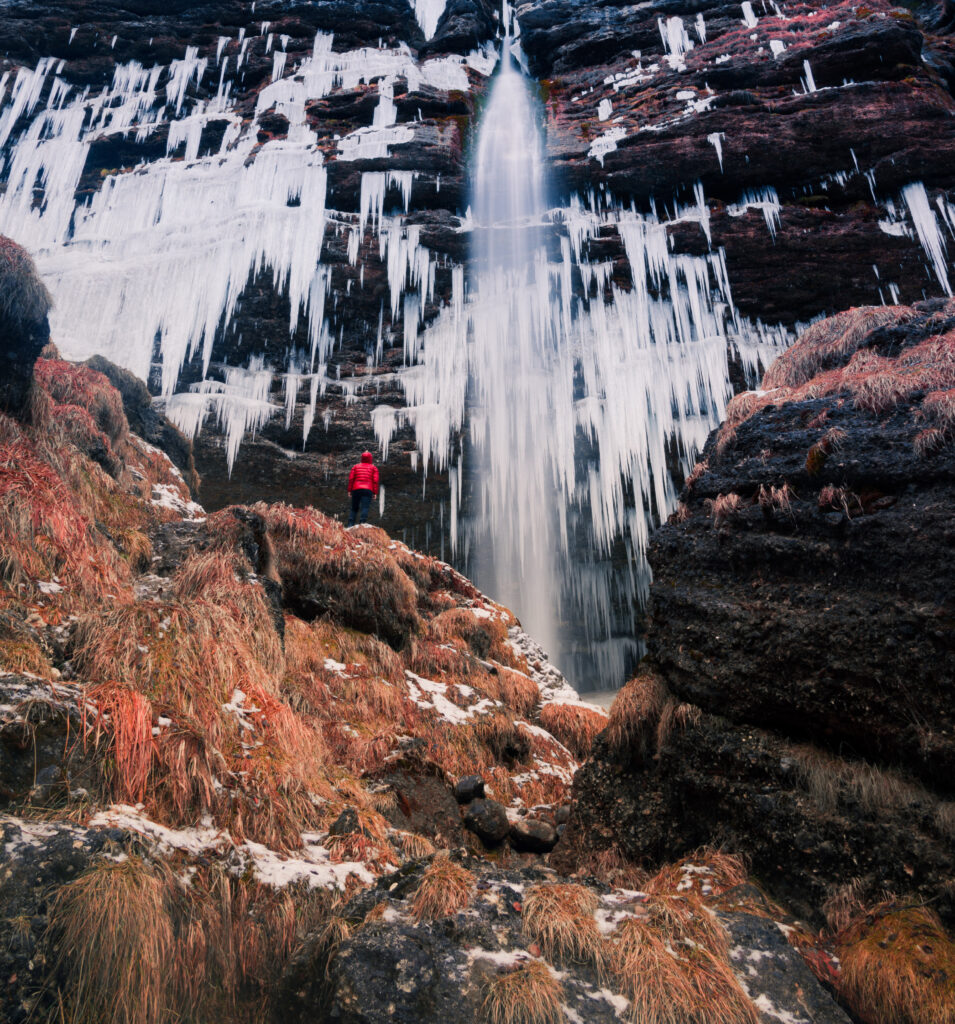
A frozen waterfall looks like time stopped.
The water locks into place. Icicles hang from ledges. Mist crystallizes along the edges. The whole thing looks perfectly, completely still. It’s one of winter’s most striking images — nature paused mid-motion, suspended in ice.
Except it often isn’t paused at all.
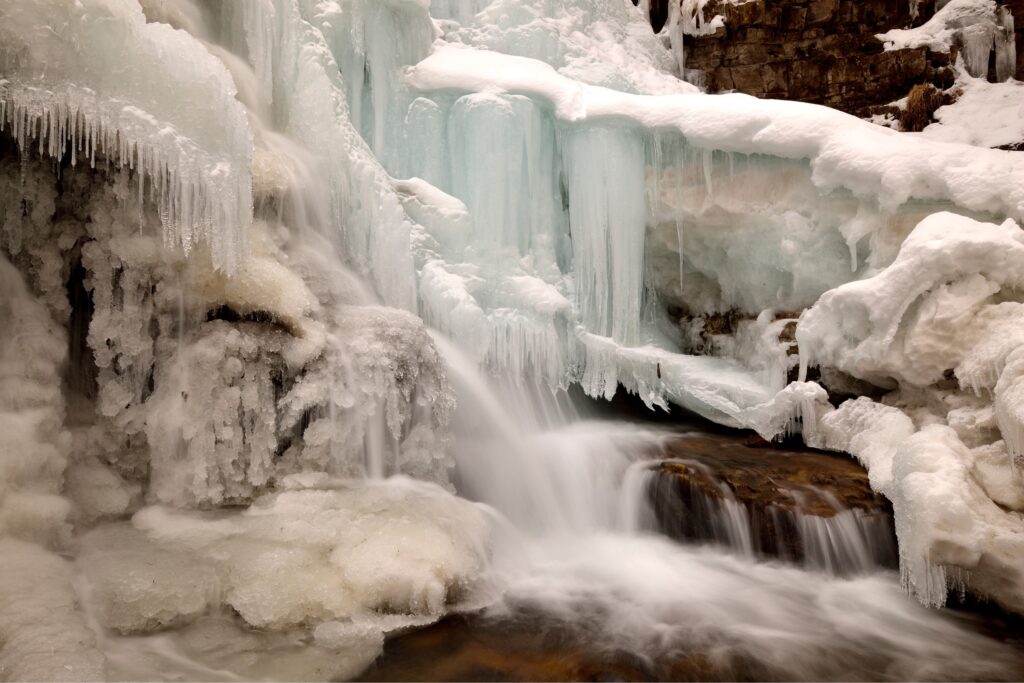
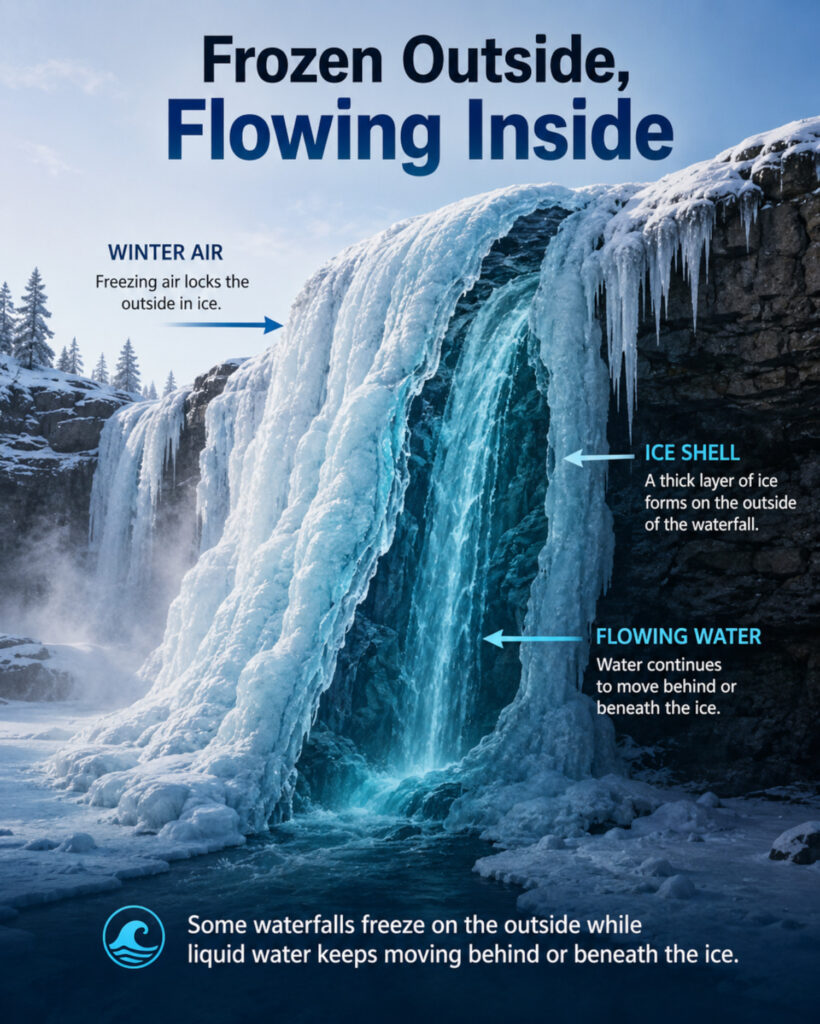
In many frozen waterfalls, water continues flowing behind the outer shell of ice. The surface freezes first — exposed directly to cold air, it hardens quickly — while the water moving beneath the surface stays liquid and keeps going.
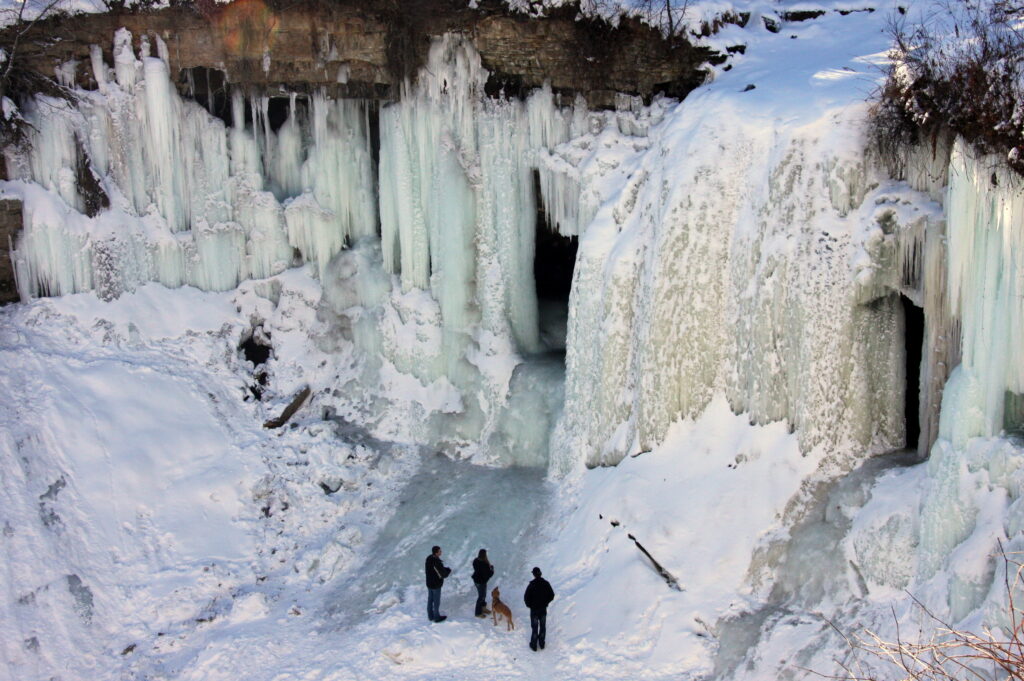
Sometimes you can hear it trickling inside the frozen structure. Sometimes you can spot dark gaps in the ice where water still peeks through, a quiet reminder that stillness on the outside doesn’t mean stillness within.
It’s one of those things that sounds impossible until you think about it: a waterfall that is simultaneously frozen and flowing, locked in place on the outside and very much alive on the inside.
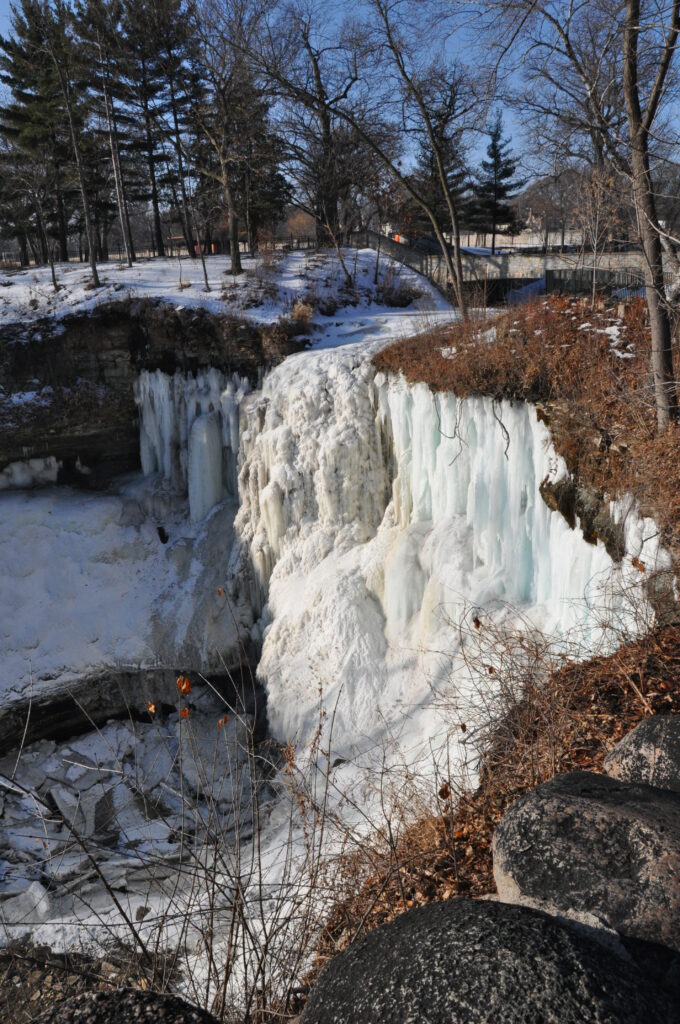
It’s also a reminder that frozen waterfalls deserve more caution than they get. Ice that looks solid and stable from a distance can be hiding moving water, thin sections, and unpredictable conditions just beneath the surface. The stillness is partly an illusion — and a beautiful one, but an illusion, nonetheless.
7. Waterfalls Can Flow Backward
This one sounds like it simply shouldn’t be possible.
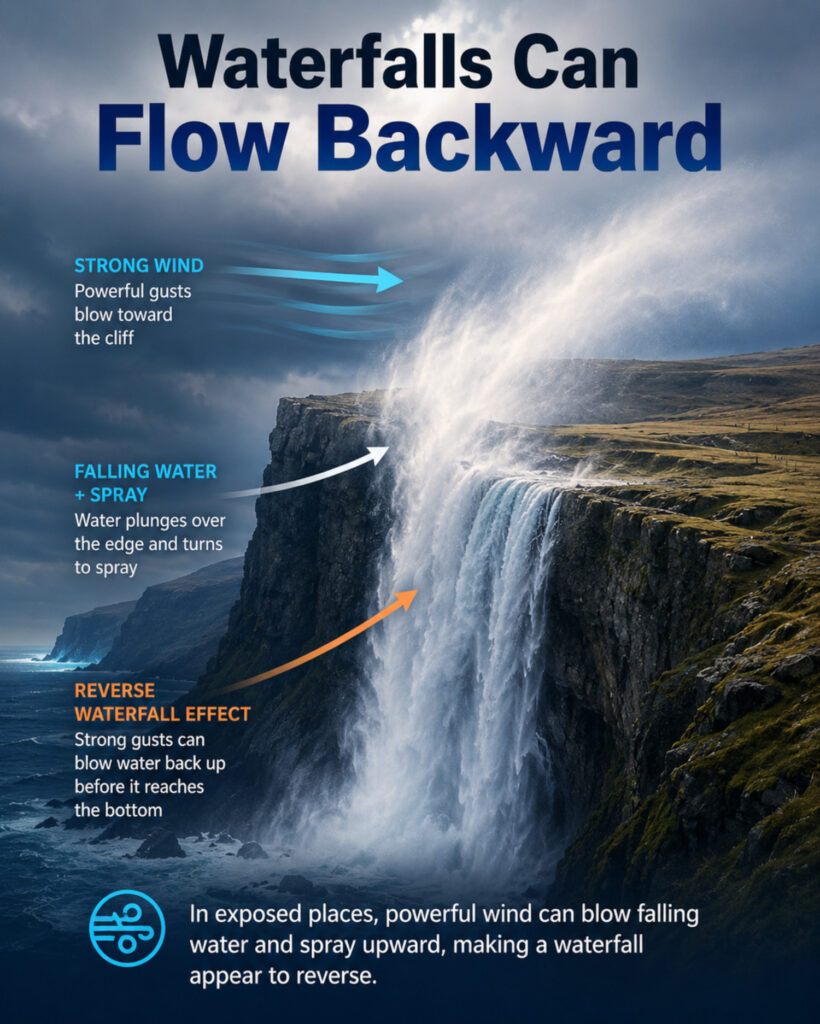
But under strong enough wind conditions, waterfalls can appear to flow in reverse. The water starts falling normally — then powerful gusts catch the spray, push it upward, and send it curling back over the very edge it just came from.
Gravity doesn’t stop working. The water is still technically falling. But wind can be powerful enough to overpower the lighter spray and outer streams, lifting them back into the air before they ever reach the bottom.
What you see looks completely wrong – A waterfall rising instead of falling. Water defying the one rule it’s supposed to follow without exception.
It helps to understand why certain places are more prone to this than others. Waterfalls that sit on exposed cliff edges, coastal headlands, or in narrow valleys are particularly vulnerable to strong wind.
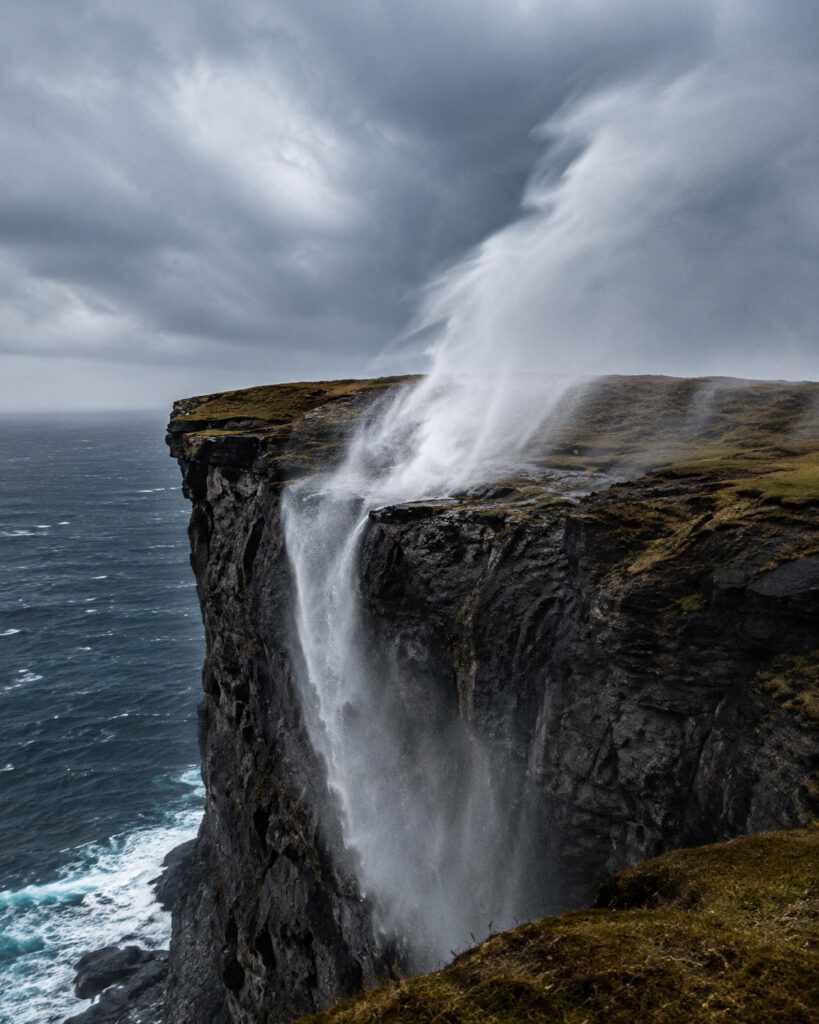
The geography that creates a waterfall in the first place — steep drops, open cliff faces, exposed ridgelines — is often the same geography that channels and accelerates wind. In some locations, the wind doesn’t just nudge the falling water. It dominates it entirely.
Kinder Downfall in England is one of the best-known places to witness this effect. Sitting on the edge of the Kinder Scout plateau in the Peak District, it faces prevailing winds that funnel up the valley with remarkable force. On the right day, there is essentially no waterfall at all — just water being thrown back into the sky. Visitors have learned to check the wind forecast before making the walk out, because what they find at the edge depends entirely on what the weather decides to do that morning.
Similar scenes have been captured at coastal waterfalls in Iceland, Norway, and along the western coasts of Scotland and Ireland, where Atlantic winds meet cliff faces head on. In some of these places, the reverse flow isn’t a rare event. It’s a regular feature of the landscape — something locals know to expect when the wind picks up.
It’s not magic. It’s not a trick. It’s wind being stronger than water — and the result looks exactly like nature broke one of its own rules.
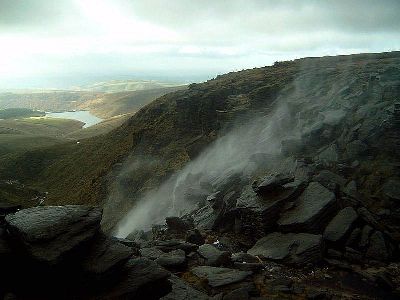

What makes this so visually arresting is how completely it overturns the most basic expectation we have about how the world works. Waterfalls go down. That’s not a rule we ever had to think about or consciously learn. It’s just true, the way dropping something is true. Seeing water rise instead trips something deep and instinctive — a quiet wrongness that takes a moment to process even when you know exactly what’s causing it.
For Waterfalls, Water Falls
But these seven waterfalls are proof that simple premises can hide extraordinary depth. Waterfalls glow, rust, hide beneath oceans, conjure rainbows after dark, dissolve before landing, flow in two directions at once, and keep moving long after they appear to have frozen solid.
Some of these things happen rarely, requiring perfect timing and precise conditions. Others are happening constantly, unseen, in places we’ll never visit or even locate on a map.
That’s what makes waterfalls such a perfect subject for curiosity. Familiar enough that everyone has a picture of one in their head. Surprising enough that the picture keeps turning out to be incomplete.
The most extraordinary things on Earth rarely announce themselves. They don’t come with signs or scenic overlooks or best times of year to visit. They just exist — glowing, rusting, reversing, dissolving, falling silently beneath oceans nobody will ever see — completely indifferent to whether anyone notices.
Next time you see a waterfall, it might be worth looking twice.
Sometimes, tucked inside the familiar, is something amazing waiting for anyone curious enough to look twice.
Leave a Reply