Did you know that some Mahjong sets include a cat chasing a mouse?
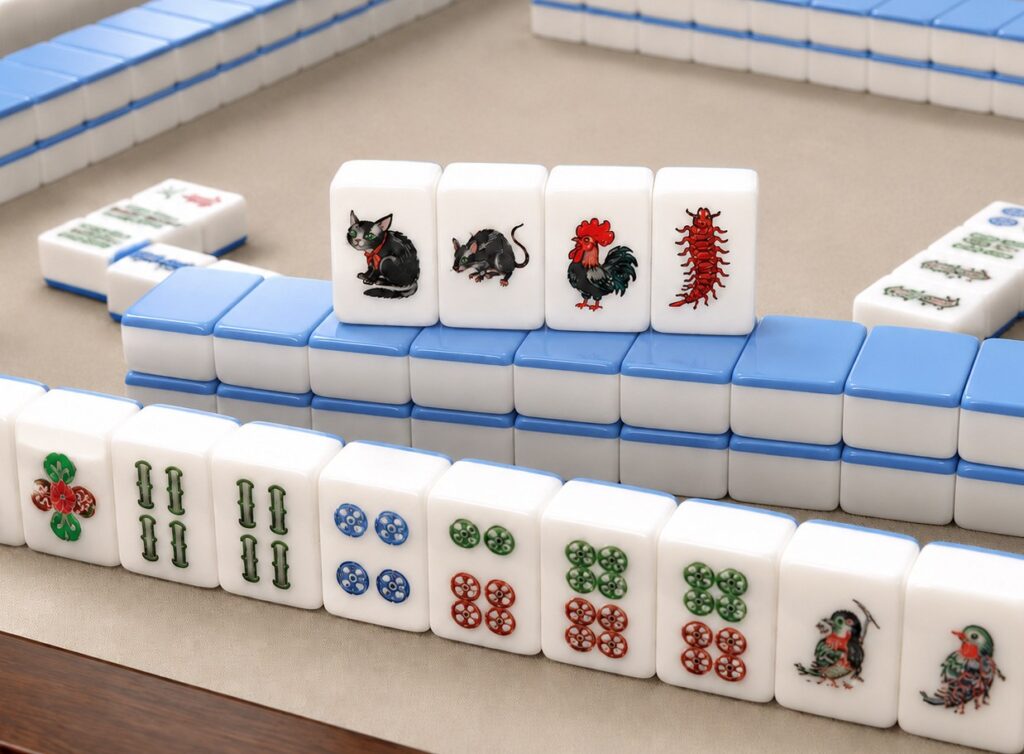
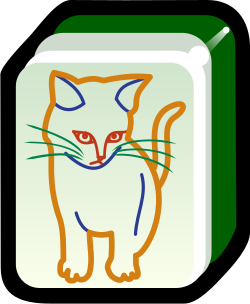
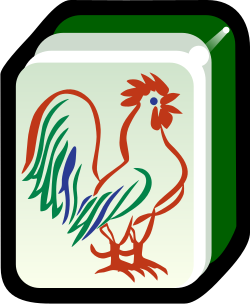
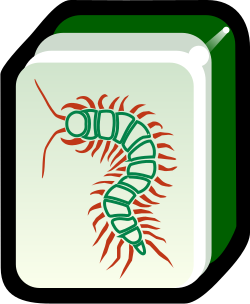
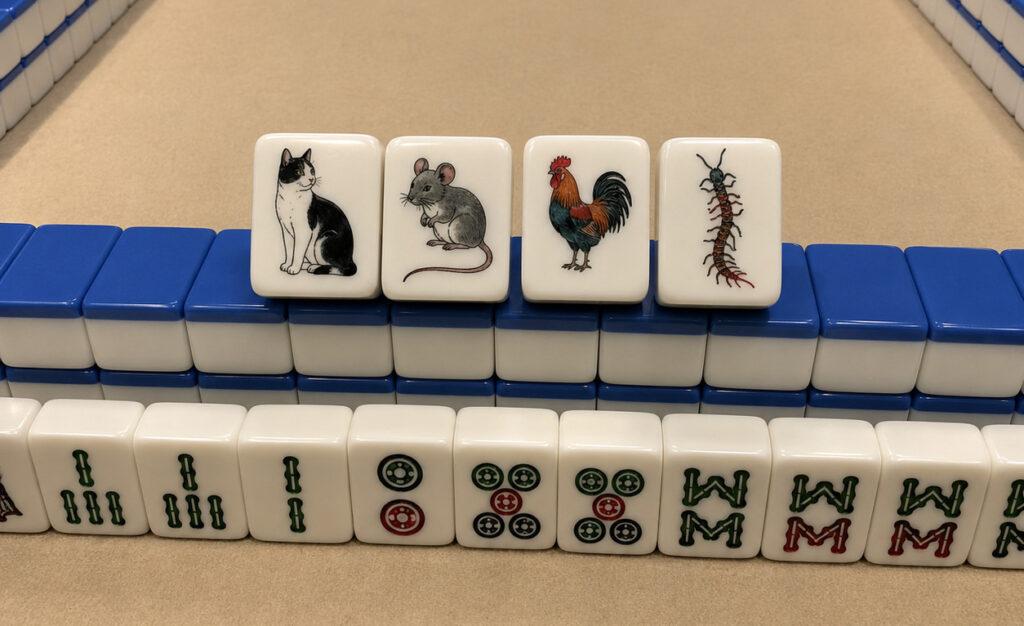
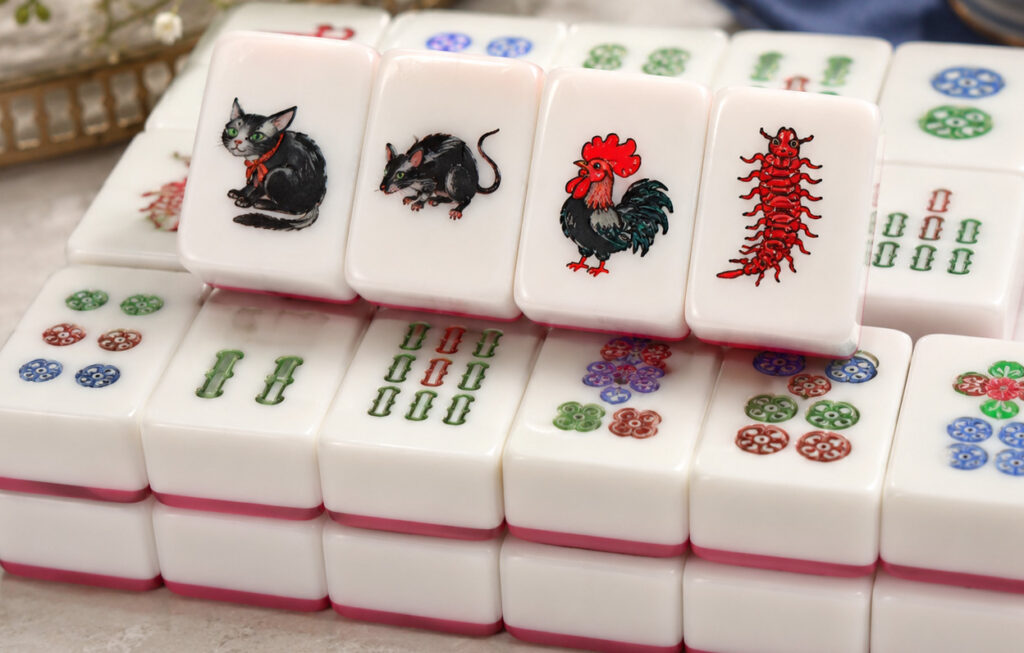
Look closely at a set used for Singapore Mahjong, and among the familiar dots, bams, winds, and dragons, you’ll find four unexpected faces: a cat, a mouse, a rooster, and a centipede.
They’re not just decoration. These animal tiles form two predator-and-prey pairs — the cat with the mouse, the rooster with the centipede — and drawing the right pair can change the outcome of the hand.
For anyone used to American Mahjong, where jokers and the ever-changing annual card define the game, discovering a completely different set of bonus tiles is a great reminder: Mahjong isn’t one universal game played the same way everywhere.
Four Animals Hidden in the Set
Singapore Mahjong is commonly played with 148 tiles: the familiar 144-tile set, plus four unnumbered animal tiles.
- the cat
- the mouse (or rat)
- the rooster (or chicken)
- the centipede
The names shift slightly depending on the set, but the relationships stay the same — a cat hunts a mouse, and a rooster will happily make a meal of a centipede. Together, they form two natural predator-and-prey pairings, rendered as detailed illustrations, simple symbols, or brightly colored characters depending on the set. Someone seeing them for the first time might reasonably wonder if they even belong in a mahjong set at all.
They do. Just not in every version.

More Than Decoration
Animal tiles are treated like flower and season tiles rather than the numbered suit tiles used to build a hand — when a player draws one, it’s revealed and set aside, and a replacement is drawn from the wall so the hand doesn’t come up short.
Each animal adds a little value on its own, and collecting all four earns an extra bonus. The real payoff, though, is in the pairs: under many Singapore Mahjong rules, drawing the cat and the mouse, or the rooster and the centipede, triggers an immediate payment from the other players — a moment some tables call getting “bitten.”
Exact payouts vary from table to table — Singapore Mahjong doesn’t run on one single standardized rulebook, so different groups handle the animals a little differently.
A Different Kind of Set
To an American Mahjong player, the animal tiles are a genuine curiosity. American sets typically include eight jokers, which can substitute in many of the groupings shown on that year’s card, although their use is restricted. Singapore-style play, by contrast, generally does not use jokers; instead, its 148-tile game includes four animal bonus tiles.
That difference says something bigger about how mahjong has traveled and changed. The game took shape in China in the 1800s, and as it spread, communities built their own versions of it — sometimes adding tiles, sometimes dropping them. Japanese riichi mahjong strips flower tiles out entirely, keeping to a clean 136-tile set. American Mahjong adds jokers. Singaporean and Malaysian sets add animals. Even the artwork on the flower tiles that remain can vary widely between sets, from fish to mythical creatures.
So the definition of a “complete” set depends on where — and how — the game is being played.
One Game, Many Traditions
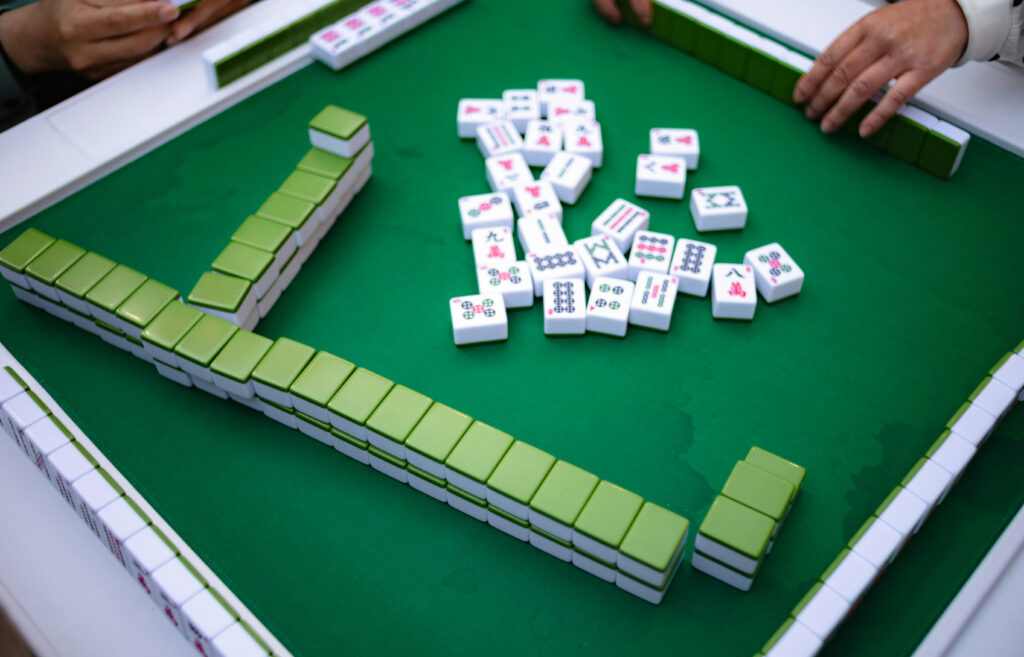
That variety is part of what makes mahjong so interesting. At a glance, players everywhere seem to be gathering around similar tables with familiar-looking tiles. But the game played in Singapore can look meaningfully different from the one played in Japan, China, Malaysia, or the United States. The core language — suits, winds, sets, draws, discards — stays recognizable, but each tradition has grown its own character around it.
In Singapore, part of that character is four small animals waiting somewhere in the wall. Draw one, and it adds a bonus. Find its match, and the table pays up. Somewhere in the middle of all that strategy, a cat catches a mouse.
The next time the tiles are washed and that familiar clatter fills the table, it’s worth remembering: somewhere else, another mahjong set might have a few unexpected creatures mixed in.
Leave a Reply