How Did People Play Pickleball for Nearly 20 Years Without Official Rules?
Imagine discovering a sport today that had no official rulebook. No governing body. No certified referees. No website explaining how to play, no organization deciding what was or wasn’t legal, no standards for tournaments or competitions.
It sounds almost impossible in today’s world, where even a mobile app launches with terms of service, a help center, and a YouTube tutorial before most people have heard of it.
Yet that is exactly how pickleball spent much of its early life.
Today, pickleball is one of the fastest-growing sports in America. There are professional leagues, national championships, official rankings, coaching certifications, and rulebooks detailed enough to govern everything from serve mechanics to the exact tolerances of a legal paddle surface. The sport has gone from backyard novelty to billion-dollar industry in a remarkably short period of time.But rewind the clock, and you find something surprising: pickleball was played for nearly twenty years before an official rulebook was ever published.
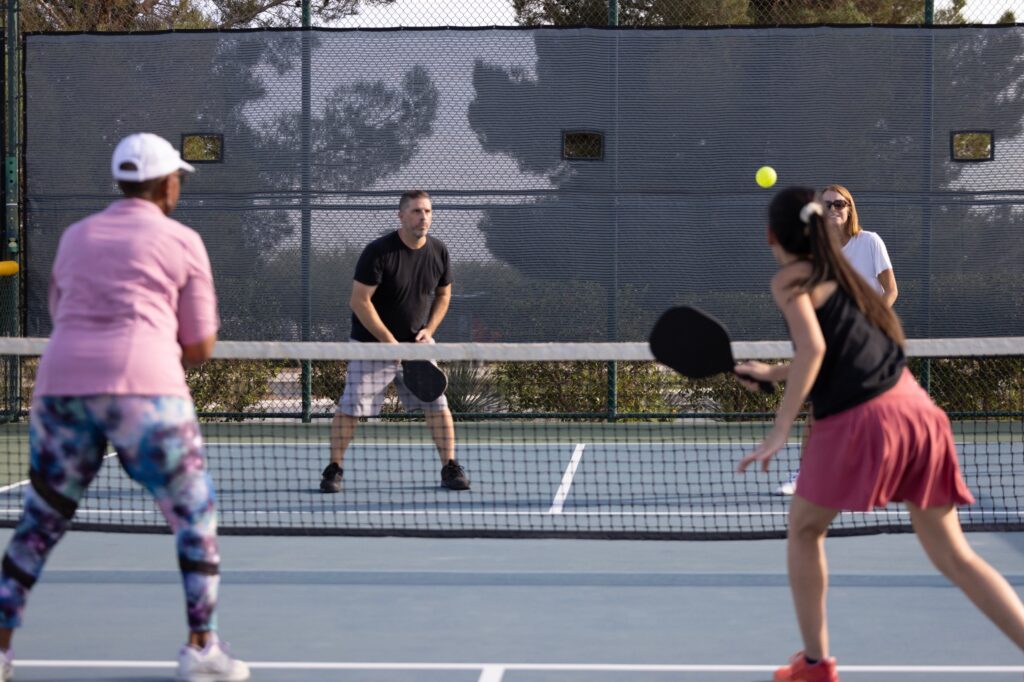
But rewind the clock, and you find something surprising: pickleball was played for nearly twenty years before an official rulebook was ever published. How was that even possible? And what does it tell us about why the sport became what it is today?
It Wasn’t Supposed to Be a Sport
The first thing to understand about pickleball’s ruleless early years is that pickleball was never supposed to need rules. At least not at first. The game wasn’t born in a boardroom or a sports science lab.
Nobody sat down with a whiteboard and a set of design principles and asked, “What would the perfect sport look like?”
Instead, pickleball began the way a lot of great things do: out of necessity, on a summer afternoon, with whatever happened to be lying around.
There was no committee studying recreational trends, no corporation trying to manufacture the next backyard craze, no professional athletes designing something for future generations to inherit.
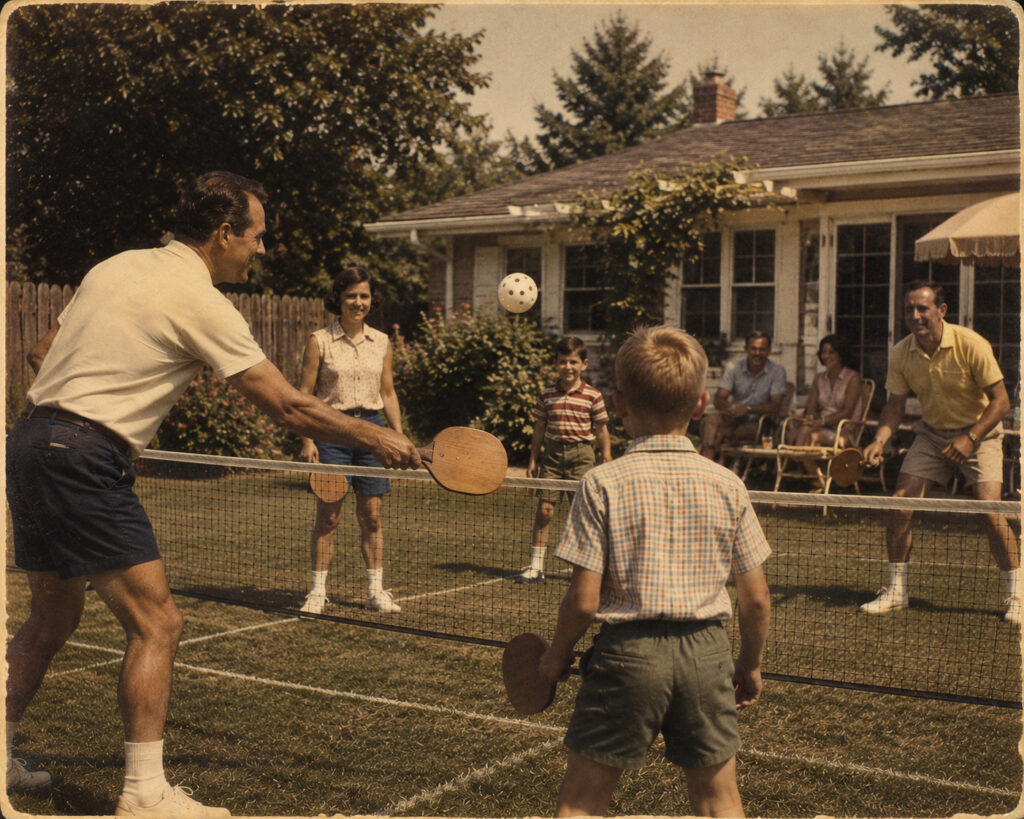
It was the summer of 1965. Several families were spending time together on Bainbridge Island, a small, forested island just a short ferry ride from Seattle, Washington. The kids were bored. The adults were looking for something that everyone could enjoy together.
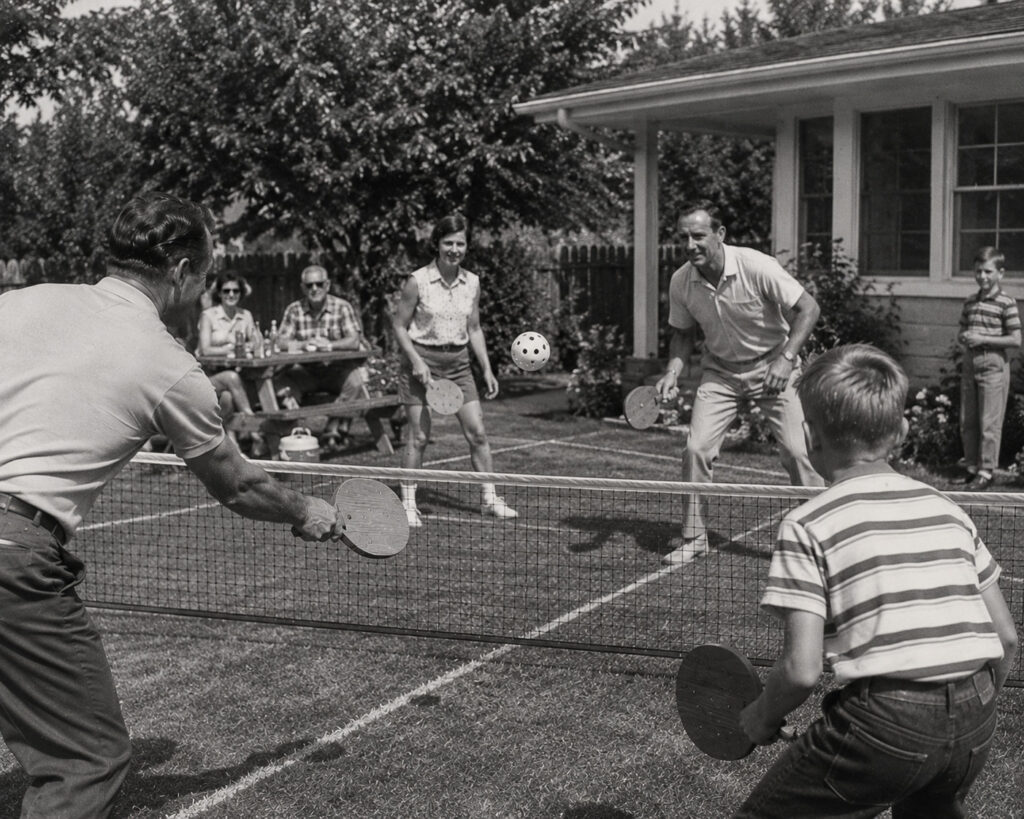
What they found was a badminton court in the backyard that nobody was using. From there, improvisation took over. The badminton net was already set up. Someone had a perforated plastic ball — the kind used for outdoor games — that happened to be nearby. Ping-pong paddles were found and pressed into service because they were available and worked well enough for the purpose.
The families started playing. They adjusted the rules as they went. If something wasn’t working, they changed it. If something was fun, they kept it. If a modification made the rallies longer or the competition more interesting, it stayed. Nobody was writing anything down. Nobody needed to. The goal wasn’t to draft a sporting constitution. The goal was to fill the afternoon. By the end of the day, they had something that felt like a real game.
The Rules That Traveled by Word of Mouth
What happened next is the part that makes pickleball’s early history genuinely unusual.
People liked it. Not just the families on Bainbridge Island, but everyone they shared it with afterward. Friends took the game home. Visitors who had played it once introduced it to their own neighbors and community centers. Local groups started organizing pickup games. Courts began appearing in backyards, parks, and recreation facilities.
The sport spread the way things spread before the internet: person by person, community by community, entirely through human connection.
And as it spread, the rules traveled with it.
This is worth pausing on, because it’s easy to assume that “no official rulebook” meant chaos — that every group was playing a completely different version of the game, with contradictory rules and incompatible formats. That’s not quite what happened.
When one person taught another how to play pickleball, they passed along how they had learned to play it. When that person taught someone else, they passed along the same understanding. The rules weren’t written down, but they were transmitted faithfully because people were playing together, in person, and correcting each other in real time.
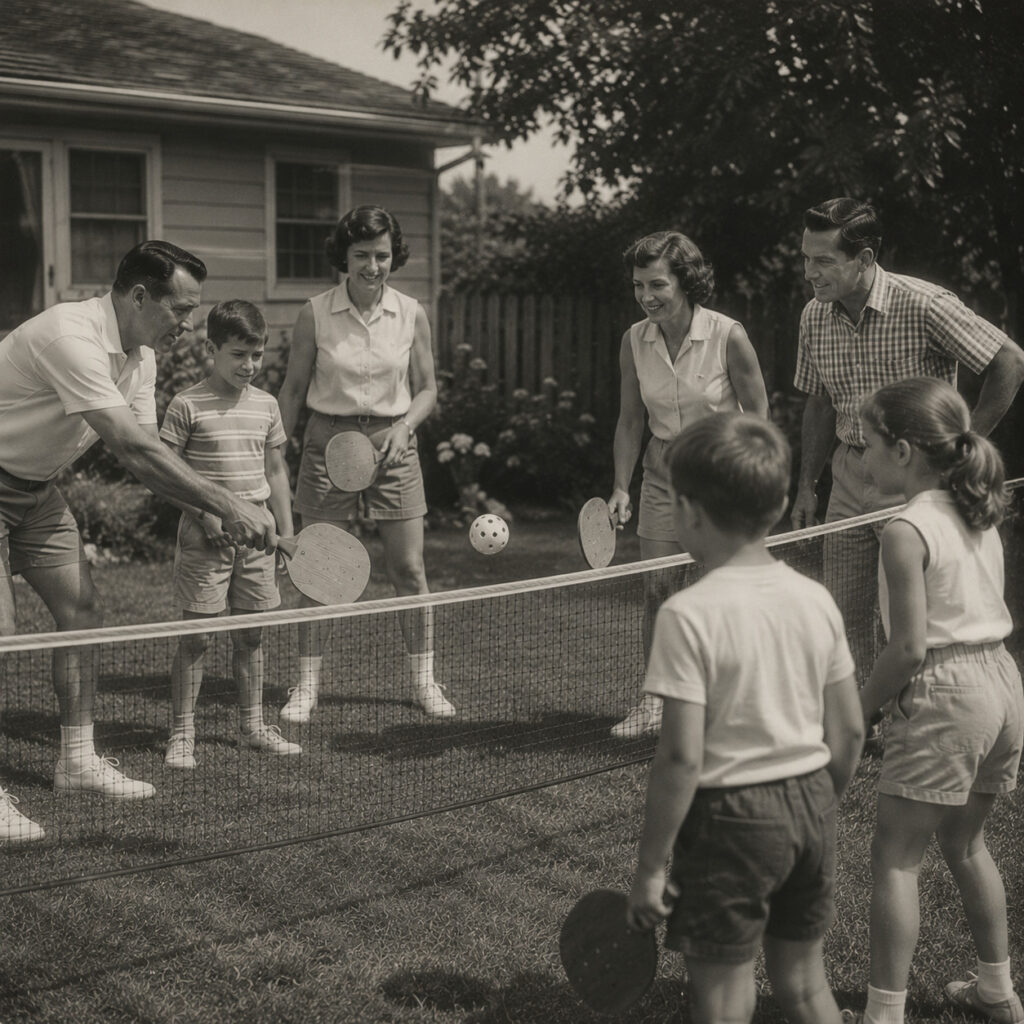
Yes, there were regional variations. Just as neighborhood basketball games sometimes have house rules, and card games can vary from family to family, early pickleball occasionally developed local differences. But the core of the game — the features that made it pickleball rather than some other game — remained surprisingly consistent across communities that had no formal connection to one another.
The underhand serve remained. The unique court dimensions remained. The perforated plastic ball remained. And perhaps most importantly, the feature now known as “the kitchen” remained.
The Kitchen: A Rule Nobody Wrote Down (At First)
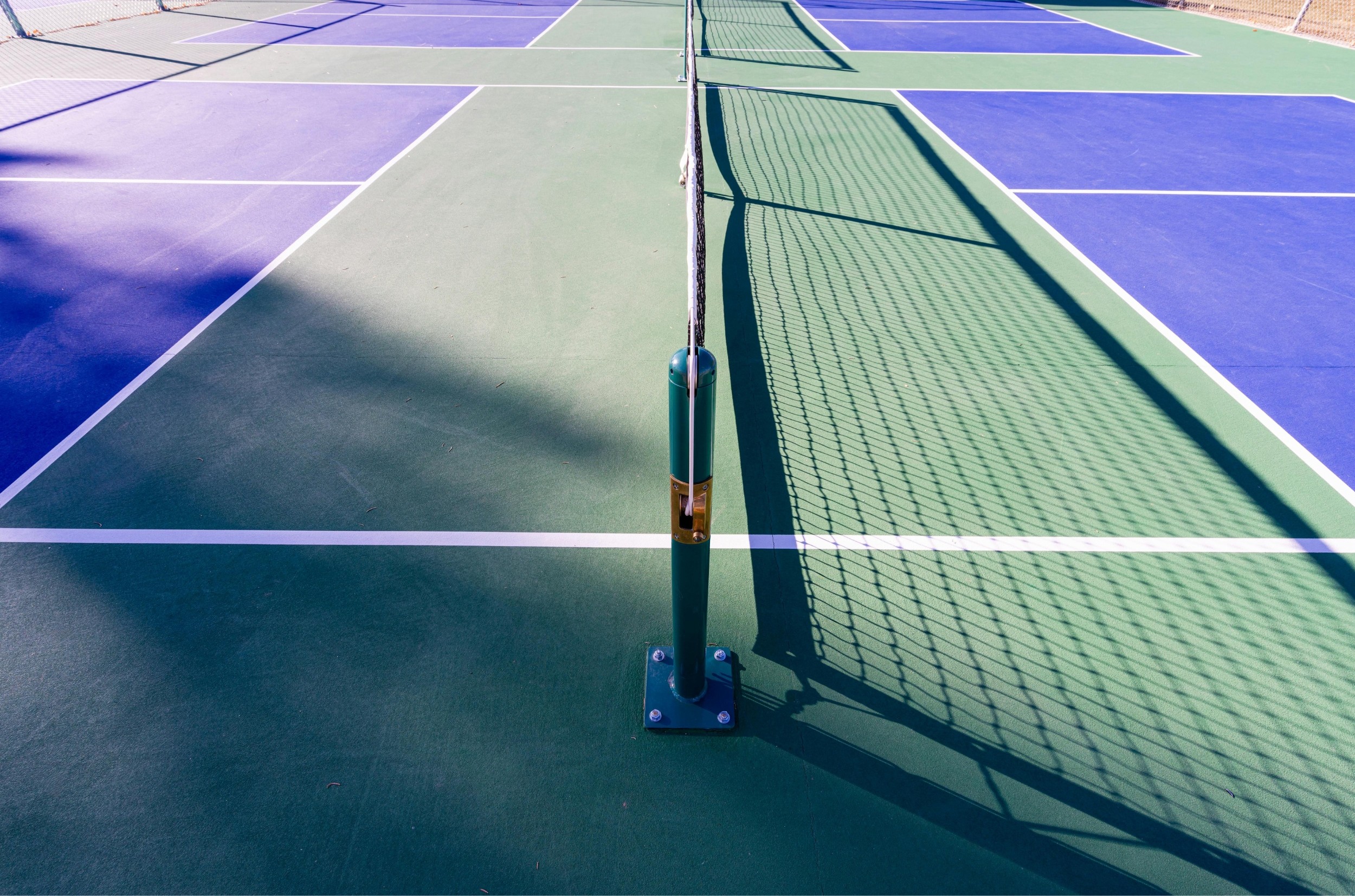
If you’ve played pickleball, you know the kitchen. If you’re new to the sport, here’s the quick version: the kitchen is the non-volley zone, a seven-foot area on either side of the net where players are not allowed to volley the ball. You can step into the kitchen to play a ball that bounces there, but you cannot stand in it and smash shots out of the air.
The kitchen changes everything about how pickleball plays. Without it, the game would reward a very different kind of player.
The person closest to the net, hitting the hardest, would dominate nearly every point. Power would trump everything else. There would be little room for the soft game, the dink shots, the patient third-shot drops, the careful positioning that makes pickleball what it is at its best.
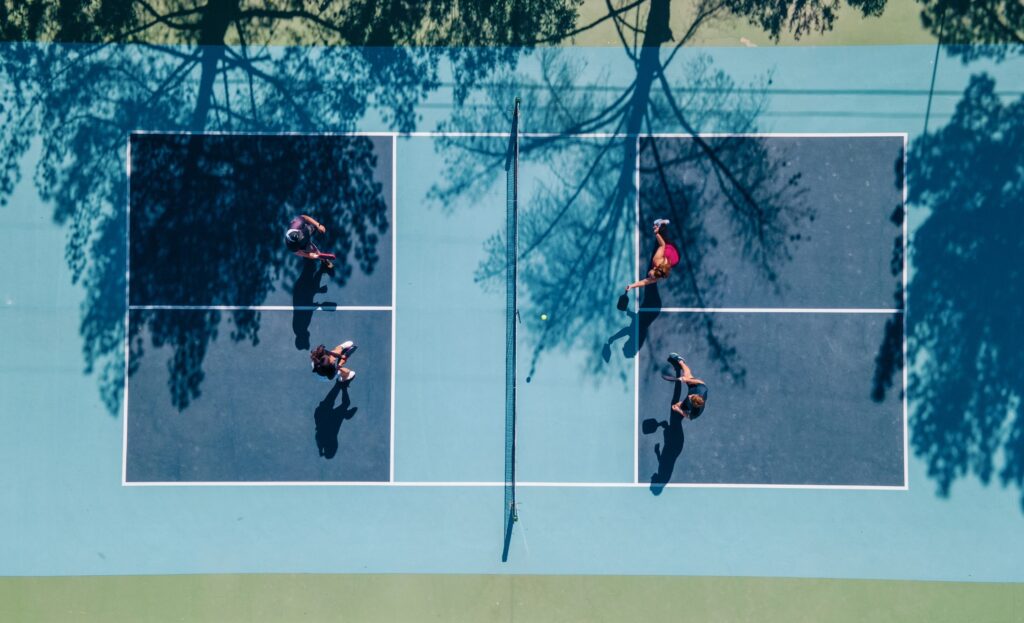
With the kitchen, none of that is possible. Players have to earn their way to dominance. They have to think about placement, angles, and patience. They have to outmaneuver opponents rather than simply overpower them.
It’s one of the most elegant design decisions in the sport — and it emerged not from a formal rules committee, but from players who recognized, somewhere in those early years on Bainbridge Island and beyond, that the game was more interesting with the constraint than without it.
By the time the first official rulebook appeared, the kitchen had already been part of pickleball’s DNA for almost two decades. It didn’t need to be invented. It just needed to be written down.
The Moment the Sport Outgrew the Handshake Agreement
For years, the informal transmission of rules was enough. Casual games didn’t need a rulebook. When you’re playing in someone’s backyard or at the local recreation center, you can sort out disagreements on the fly. You can ask someone who’s been playing longer. You can defer to the person who taught you. The social fabric of the game provides enough structure to keep things running smoothly.
But as the 1970s wore on and pickleball continued to grow, a new challenge emerged.
Organized tournaments started appearing. Players began traveling to compete against people from other cities and regions — people who had learned the game from entirely different sources, through entirely different chains of transmission. Tournament directors needed to make calls. Referees needed guidance. And players who had traveled hours to compete needed to know that everyone was working from the same playbook.
A casual backyard game can operate on shared understanding and good faith. A tournament cannot.

The sport had finally reached a stage where the handshake agreement wasn’t enough. Pickleball had grown beyond what informal transmission could reliably sustain. It needed something permanent, something that could be consulted and cited and distributed — not to replace what players had been doing for years, but to codify it.
That moment arrived in 1984.
Nearly twenty years after those first improvised games on Bainbridge Island, the first official pickleball rulebook was published. It didn’t invent the sport’s rules so much as document them — capturing, in writing, the consensus that had been carried by players from community to community for almost two decades.
What That Says About Why Pickleball Worked
Think about how unusual this sequence really is.
Most modern sports, games, and activities launch with extensive documentation before they ever reach an audience. Leagues publish regulations immediately. Apps launch with tutorials and support pages. Even backyard lawn games come with an instruction sheet in the box.
Pickleball took the opposite approach — not by design, but by circumstance. The game existed before the rules were written. The community existed before the organization. The love of the sport existed before the official structures meant to support it.
And the remarkable thing is that this didn’t hurt pickleball. It may have helped it.
When people learn something by playing it — by experiencing it, adjusting to it, and teaching it to someone else — they develop a different kind of ownership than people who read about it in a manual. The rules of pickleball weren’t handed to early players from above. They were worked out collectively, refined through thousands of games played by people who were genuinely trying to make the game as enjoyable as possible.
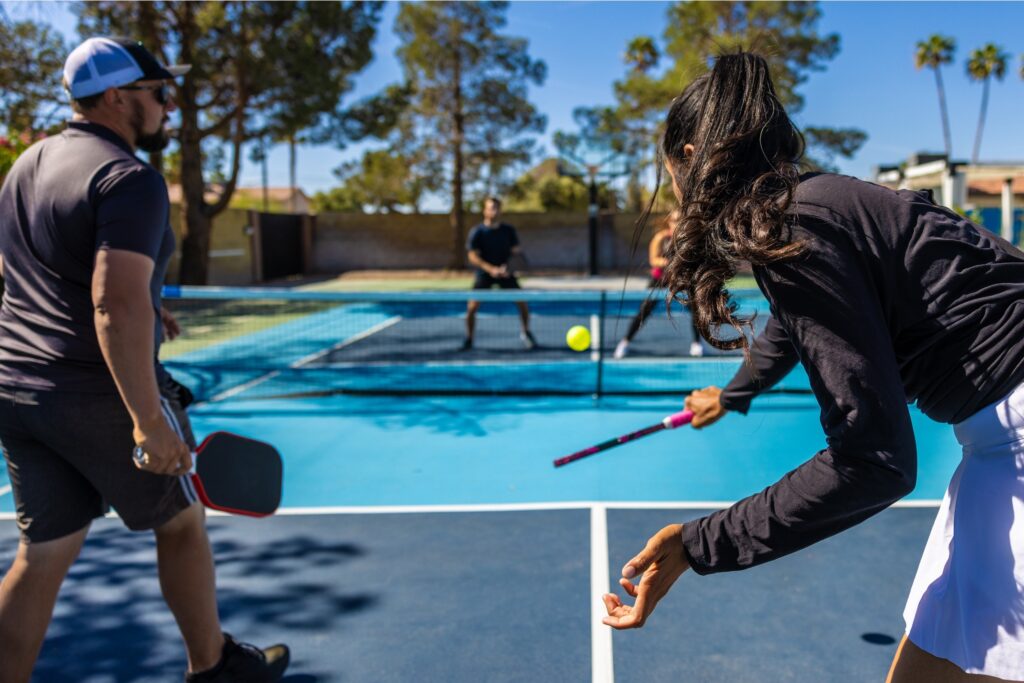
By the time the first official rulebook appeared in 1984, it wasn’t introducing people to something new. It was recognizing something they had already built. That’s a rare thing in the history of sports. Most games are designed and then played. Pickleball was played, and then — almost as an afterthought, two decades later — officially described.
Today, pickleball is governed by USA Pickleball (formerly the USAPA), which maintains official rules, certifies referees, sanctions tournaments, and oversees the sport at the national level. There are now two competing professional leagues. There are coaching certifications, paddle testing standards, and detailed specifications for court dimensions, ball tolerances, and net heights.
All of that exists because the sport needed it — because growth eventually demands structure.
But none of it is where pickleball started. And arguably, none of it is why pickleball succeeded.
The sport didn’t grow because someone created the perfect rulebook and distributed it effectively. The rulebook was created because the sport had already grown — because enough people had already fallen in love with the game to make official organization worthwhile.
People didn’t fall in love with a set of written rules. They fell in love with the game itself.
By the time the first official rulebook appeared in 1984, thousands of players already knew exactly why they wanted to keep playing. They’d known for years. They’d been teaching each other without needing to be told.
Before there was an official rulebook, there was simply a game that people enjoyed enough to share — and it turns out, that was more than enough to build a sport on.
Leave a Reply